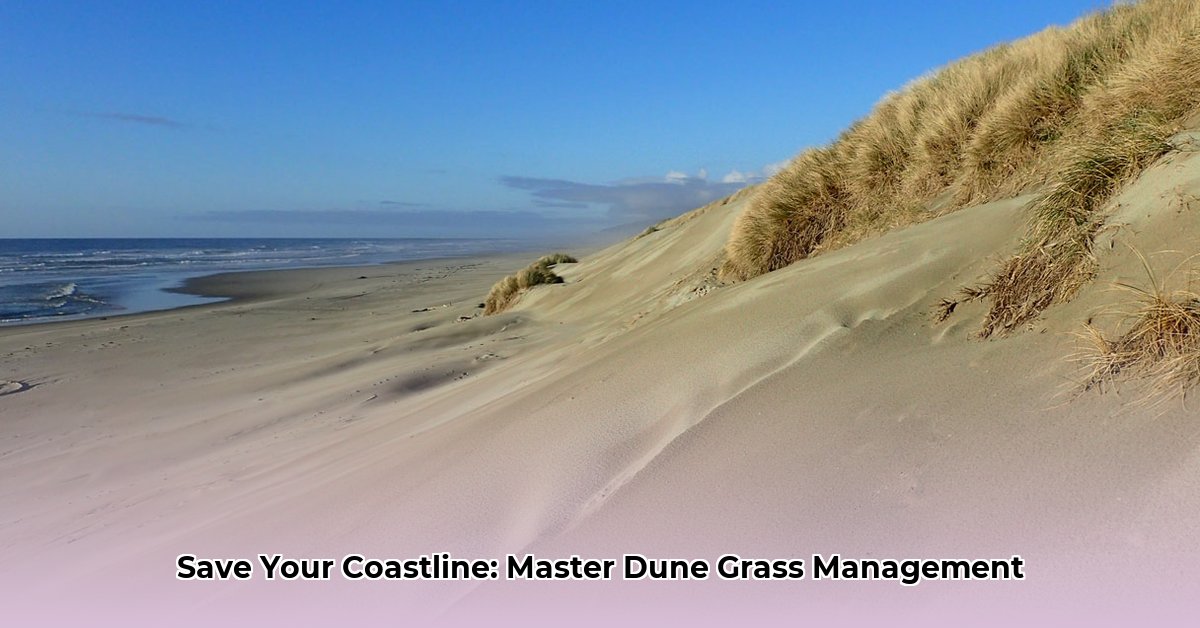
Imagine our coastlines slowly eroding, vulnerable to the relentless forces of nature. Coastal dune grasses are nature's superheroes, safeguarding our shores from storms and erosion. For more information on specific dune grass species, check out this helpful guide: Dune Grass Guide. This comprehensive guide provides actionable strategies for effective dune grass management, ensuring the long-term health and resilience of our coastal ecosystems. We'll cover everything from selecting the right plant species to advanced techniques and regulatory considerations, empowering you to become a coastal conservation champion.
Choosing the Right Plants: A Foundation for Success
Selecting the appropriate dune grass species is paramount. Different species thrive under varying conditions, influencing project success. Why is this crucial? The wrong choice can lead to slow growth, increased vulnerability to erosion, and reduced biodiversity.
American beachgrass, a rapid colonizer, excels at initial dune stabilization. However, its prolific growth can sometimes create monocultures, reducing biodiversity. Sea oats and bitter panicum offer a slower, more sustainable approach, fostering diverse and resilient dune ecosystems. The optimal choice depends on factors like soil type, salinity, and exposure to wind and waves. A mixed-species planting often provides the most robust and resilient outcome. Consider the analogy of a diverse garden versus a monoculture – a varied planting offers resilience against various stressors. What's the best way to ensure success in your planting scheme?
Comparing Common Dune Grasses:
| Species | Pros | Cons |
|---|---|---|
| American Beachgrass | Rapid growth, excellent initial dune stabilization | Can form dense monocultures, potentially reducing biodiversity |
| Sea Oats | High biodiversity value, salt-tolerant, wind-resistant | Slower growth rate, may require more established conditions |
| Bitter Panicum | Drought-tolerant, good windbreak, attracts wildlife | Slow establishment, may not be suitable for all sand types |
Planting Techniques: A Step-by-Step Approach
Successful dune grass planting requires careful planning and execution. Follow these steps for optimal results:
Site Preparation: Clear away debris and loosen compacted soil to facilitate root penetration. This step is crucial for successful establishment.
Plant Selection and Acquisition: Choose locally adapted species based on site conditions. Source healthy plants from reputable nurseries.
Planting: Dig holes slightly larger than the root ball. Gently place the plant, ensuring the root ball sits level with the ground. Backfill and firm the soil gently around the base. Proper spacing is key to avoid competition for resources.
Watering: Water thoroughly after planting, especially during dry periods. Avoid overwatering to prevent root rot.
Mulching (Optional): A light layer of mulch can improve moisture retention, but it's not always necessary, especially in areas with regular rainfall.
Post-Planting Care: Nurturing Long-Term Success
Ongoing maintenance is critical for the long-term health of your dune grass planting. Consistent care promotes thriving ecosystems. What’s the best practice to ensure the success of your hard work?
Watering: Consistent watering, particularly during establishment, is crucial. Avoid overwatering.
Weeding: Regularly remove invasive weeds to minimize competition.
Fertilizing: Use caution! Excessive fertilizer can harm the ecosystem. If fertilizing is necessary, opt for slow-release, low-nitrogen options. Many experts recommend avoiding fertilizer altogether.
Pest and Disease Monitoring: Regularly inspect for pests and diseases. Early detection allows for prompt treatment.
Advanced Techniques: Enhancing Resilience
For enhanced dune stabilization, consider integrating advanced techniques. These methods amplify the effectiveness of your initial planting plan.
Sand Fencing: Sand fencing helps trap windblown sand, building up the dune around plants.
Erosion Control Mats: These mats provide extra protection during high-energy events.
Adaptive Management: Adapt your strategies based on environmental changes, such as sea-level rise and changing weather patterns.
Stakeholder Collaboration: A Shared Responsibility
Successful dune grass management requires collaboration. Land managers, government agencies, local communities, and researchers all play a vital role. Community involvement through volunteer efforts and educational programs creates lasting impact and broadens support for coastal protection. What's the impact of collective action on environmental projects?
Regulatory Compliance: Understanding the Legal Framework
Before initiating any project, familiarize yourself with local, state, and federal regulations. Permits may be required depending on the project's scale and location. Non-compliance can result in penalties and project delays.
Conclusion: Investing in Coastal Resilience
Coastal dune grass management is a long-term investment in coastal resilience. By following these guidelines and fostering collaboration, we can safeguard our coastlines for future generations. Remember, a healthy coast is a resilient coast. What are the long-term benefits of sustainable dune management?